
Month: November 2013
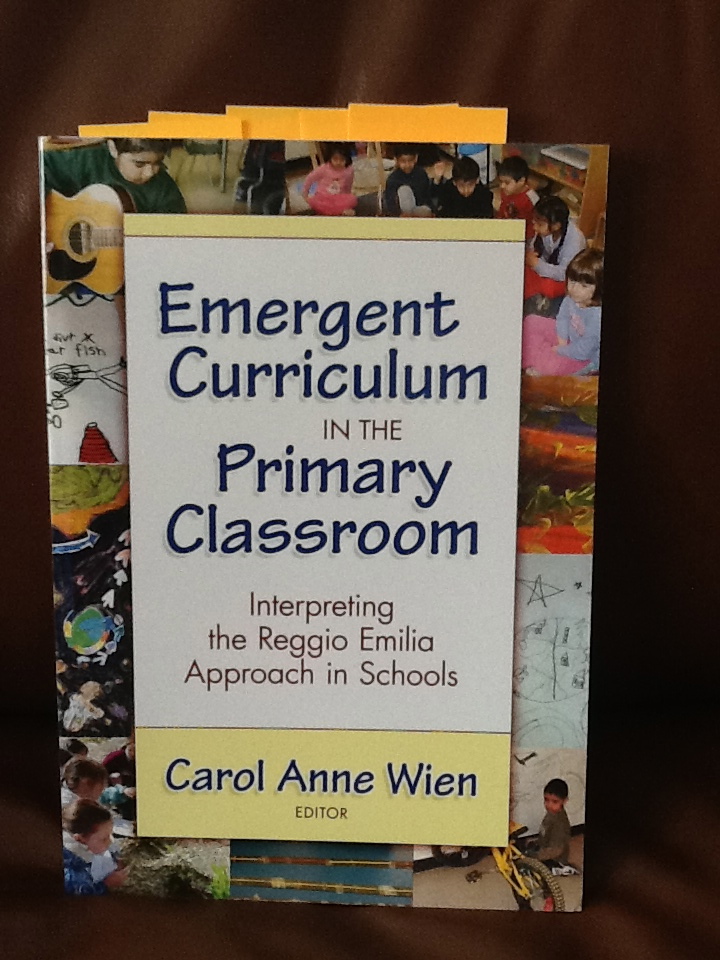
Emergent Curriculum in the Primary Classroom by Carol Anne Wien
StandardEmergent Curriculum in the Primary Classroom is an essential read for anyone wishing to understand emergent curriculum and who hope to nurture an enlivening, energizing way to learn!
You may be wondering how to get started creating this exemplary curriculum in spite of pressures to implement a standardized one!
Pages 96-110 of this resource will rejuvenate you! A teacher wants to begin with the Reggio inspired curriculum but is uncertain how it would unfold.
Diljot’s question, “How do starfish be born?” is the provocation.
As the children pondered and theorized about the question, observations demonstrated that the children’s theories were flexible and capable of evolving. Conversations flourished. Documentation as process helped with ongoing planning. As children documented, their theories shifted. Graphic representations represented gateways into the children’s thinking, and as their theories became clearer so did their representations. With flexible allowances of time, children’s thinking was provoked through higher level questions that encouraged critical thinking and inference-making. Content needed to be layered to support thinking. The teacher encouraged the children to emerge as empowered researchers in an emergent curriculum that was coconstructed. Together they shared discoveries, challenges, and conflicts always moving forward!
This book is a treasure!
Beautiful Stuff
Standard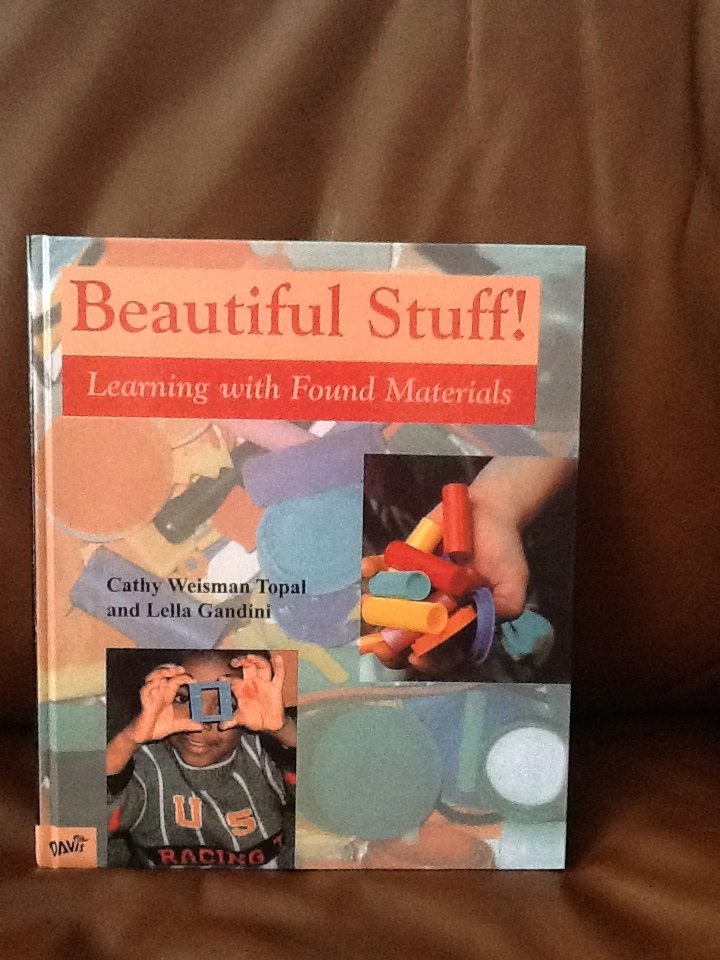 Beautiful Stuff is a resource you will want to have! It is written by Cathy Weisman Topal and Lena Gandini. It is a delightful book where you will find approaches to nurturing the innate creativity of children that you can adapt to any teaching situation. These two teachers were inspired by educators from Reggio Emilia, Italy who observed and recorded what would happen when the focus is on process rather than product. This resource provides tons of suggestions for collecting, discovering, organizing and exploring materials. It even includes a letter that can be sent home to parents to assist in the collecting process! There are great observations to glean from the children as they explore the materials. Some children are interested in design and setting up a pleasing composition, others use the materials to tell a story! It’s amazing what we can learn about children as we document the children’s process of discovery!
The outcome was more amazing than I could have imagined!
StandardHi! I have to share this “teachable moment” that happened this week outside of the kindergarten classroom. What great excitement when we looked out the window! This little friend was there grazing! The kids wanted me to go out and take its picture…with my iPhone in hand, I stepped just outside the door and approached slowly to get a good pic without scaring it. The pressure was on as the children watched through the window. I discovered that if I clicked my tongue…the deer was curious, and lifted his head to watch me approach. Anyhow, I got very close and was happy with the picture to show the children! They were thrilled! Well, the picture prompted all kinds of questions from the children! For the rest of the afternoon, we read about deer, googled deer facts, discussed sounds deer might be interested in, drew deer, made play-dough deer, painted deer, shared deer stories, made a KWL chart and had fun taking learning stories home to share with families! This week we are going to watch a video…Stranger in the Woods by Carl Sams II  & Jean Stoick featuring beautiful deer in their natural environment.
“Inquiry is an approach to learning whereby children find and use a variety of sources of information and ideas to increase their understanding of a problem, topic or issue of importance. it requires more than simply answering questions or getting a right answer. It espouses investigation, exploration, search, quest, research, pursuit and study. It is enhanced by involvement with the community of learners, each learning from the other in social interaction.”
Kuklthau, Maniotes & Caspari 2007 What is Inquiry? p. 2
Pedagogical Documentation
StandardThrough pedagogical documentation, educators are finding creative and lasting ways to…
1. Create shared understanding.
2. Celebrate rights of individual learners.
3. Recognize student ownership of knowledge.
4. Actualize shared responsibility.
5. Provide voice in learning for everyone.
Assessment often focuses on determining children’s levels of competency, not uncovering children’s processes of meaning making.
Standard Assessment beginning with stepping back and listening??
I have found these resources very helpful!
The concept of documentation is a procedure used to make learning visible, so that it can be recalled, revisited, reconstructed, interpreted, and reinterpreted as a basis for decision making. In-depth documentation can reveal the learning paths that children are taking and processes they are using in their search for meaning. Documentation is a tool for helping teachers and children reflect on prior experience; listen to each other’s ideas, theories, insights, and understandings; and then make decisions together about future learning paths. Taken from p.274 The Hundred Languages of Children
Traces of learning e.g. notes, photos and videos can be shared with children so they can examine their work. Teachers scaffold the children’s reflections with probing questions which encourage the children to take their thinking further, or to look at their ideas again and explain to others. Children learn to self-assess.
The concept of a responsive curriculum and negotiated learning, that puts documentation at the centre of learning and teaching may raise questions from some observers. As we share the advantages of this learning, mindsets experience change.
Documentation moves us beyond an interest in outcomes and moves us to an exploration of relationships and feelings that form the stuff of educative experience. (Yu, 2008)
What does it make you wonder about?
StandardBelow are some sites you may want to visit to deepen your roots into inquiry based learning.
http://resources.curriculum.org/secretariat/kindergarten/inquiry.html
http://www.edutopia.org/kindergarten-project-based-learning
edugains videos on ministry website
http://www.makinglearningvisibleresources.org/
The Capacity Building Series at http://www.edu.gov.on.ca/eng/literacynumeracy/inspire/
 Leaders must have a comprehensive and current understanding of inquiry, play-based learning.
An inquiry stance is critical to engagement and sustained learning across grades. Taken from The Early Years: Transforming Vision into Reality A Conversation with System Leaders Ministry of Education
How did South Shore’s Outdoor Classroom become a reality?
Standard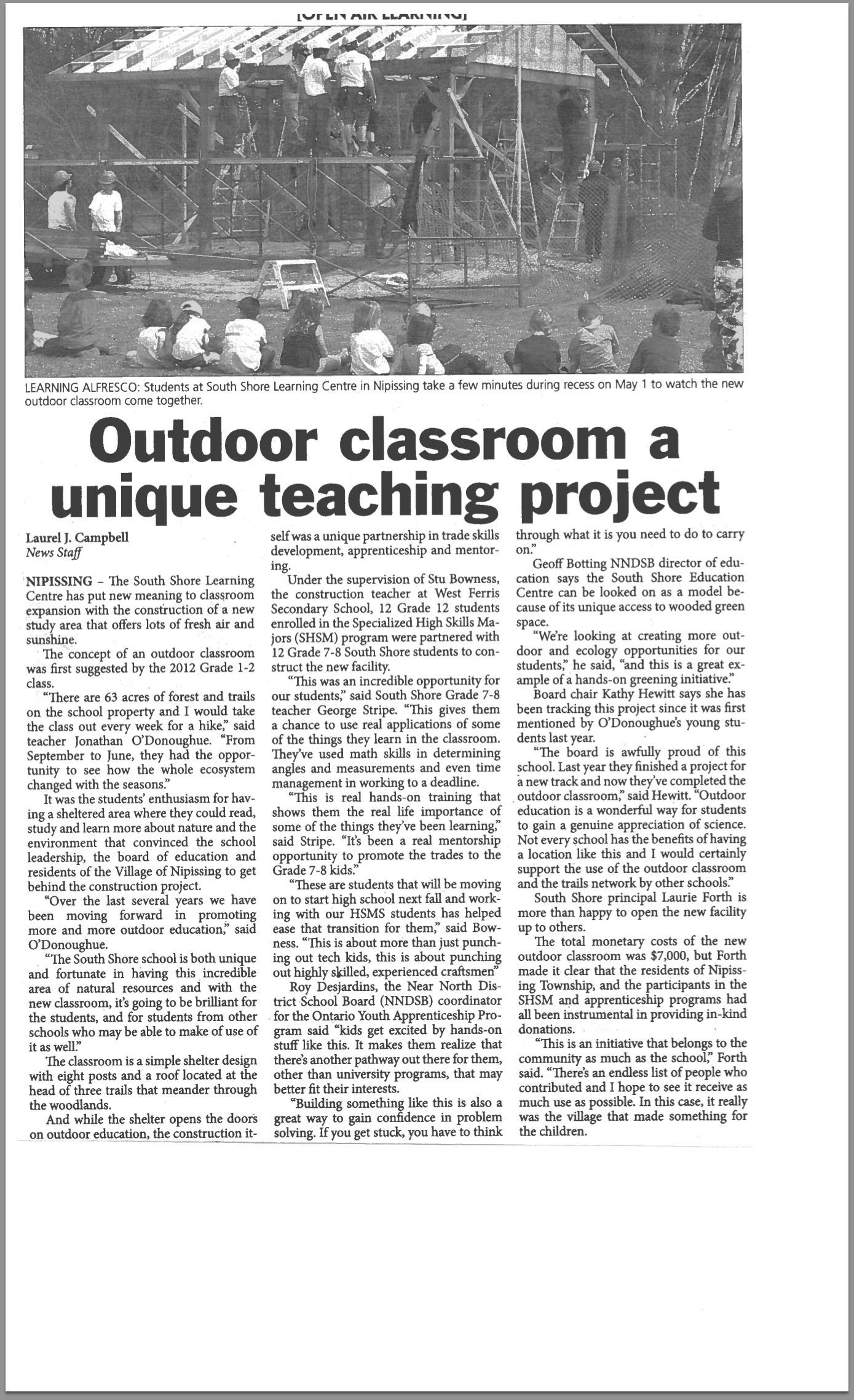
Our Outdoor Classroom at South Shore Education Centre
StandardMargie Carter’s article, “Making Your Environment The Third Teacher” in Exchange, The Early Leaders’ Magazine is wonderful! The environment is actually a powerful teacher.
“Every person needs a place that is furnished with wonder and hope.” Maya Angelou
Gandini suggests creating flexible environments that are responsive to the need for children and teachers to construct knowledge together.
A Plethora of Resources for developing, implementing, assessing, and managing inquiry and project-based learning with young children in an Early Learning Kindergarten Program.
Standard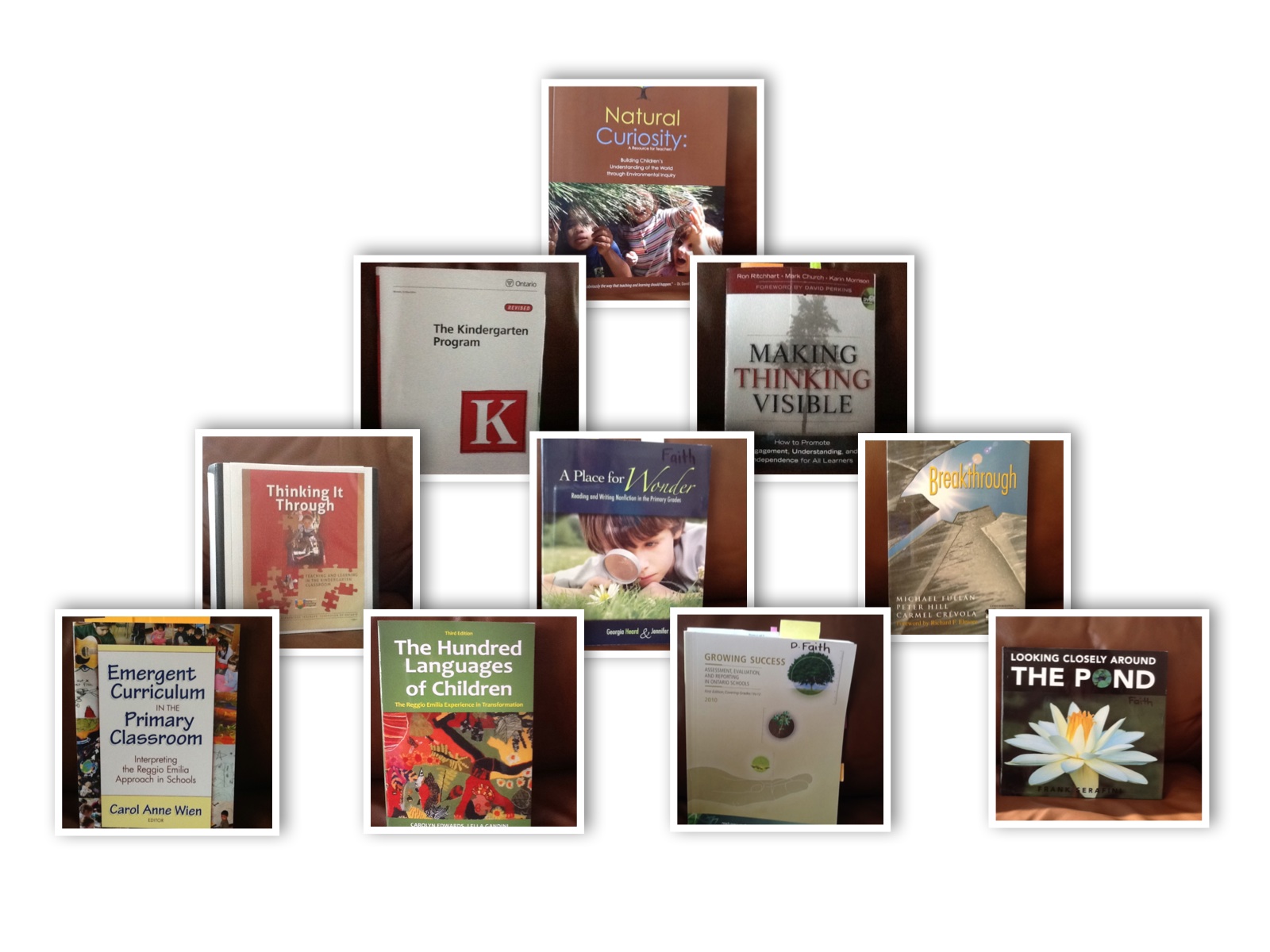
 A Place of Wonder